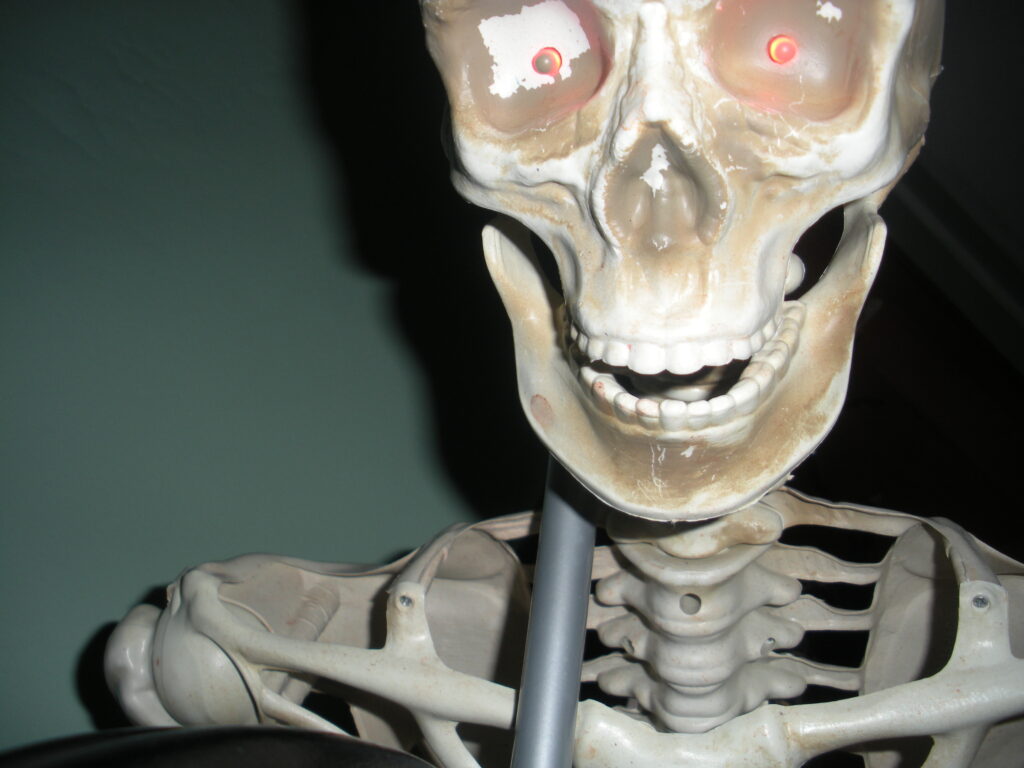
Picture this: you’re 10, and you’ve just gotten home after a firework of a school day — short-lived but exciting. Halloween decorations covered the classroom walls, and little paper bags with stickers and cheap candy sat full on desks. And of course, your costume. Weeks beforehand, you had agonized for minutes over which Party City costume to pull from the shelf. You meandered through the long aisles of tulle, foam, and candy, excitedly exploring the possibilities of who you could be for a night.
Consumerism is hurting both the environment and our participation in holidays. The focus has shifted from celebrating traditions to buying their fulfillment. Not to say that overconsumption is a modern problem — companies have been exploiting consumer excitement during the holiday season for decades, using marketing to push them to buy more and more. But with improvements to manufacturing and shipping technology, this exploitation has exploded in the 2020s. Yet the quality of products has only gone down.
Something you probably didn’t consider as a child was the material in the costumes. Most modern commercially-made Halloween costumes are sewn from synthetic materials, notably polyester, to cut down on production costs. Artificial fabrics have found their way into hats, pants, dresses, skirts, corsets, gloves, vests, jewelry, props and most importantly — landfills.
On average, 35 million Halloween costumes in the U.S. are thrown away every year, and around $4.3 billion is spent on them. Halloween decorations also tend to be tossed when the season is over — with $4.2 billion splurged on them annually — clearing the way for Christmas ones to take their place. When we give in to overconsumption, we corrupt the idea of a holiday into an excuse to spend money rather than creating community and memories.
Picture this: you’re 20, and you’ve just gotten back to your dorm from class. With the rest of your relatively-mundane Halloween day free, you and some friends crowd onto a bus and head over to Spirit Halloween. There’s a party tonight, costumes are mandatory and it’s too late to order one online. You spend minutes agonizing over which costume to buy — some things never change. But the prices certainly do. You end up spending $53.78 on a costume that will rip before the night is over and never be touched again after.
Besides the ecological and biological impact, we harm our ability to appreciate the past by thoughtlessly buying and discarding costumes. They have become an expectation rather than an exciting part of the holiday; motivated by nostalgia, consumers take for granted our easy access to ready-made Halloween paraphernalia. We buy costumes and decorations to fulfill traditions, and rid ourselves of the clutter when the time has passed. However, there is a way to make these items well worth their cost.
Next Halloween, consider making a costume out of clothing you already own. You’ll save time, money, and attach a great memory to a piece of clothing you may not have valued as much before. If you do own a polyester costume (or piece of one), you don’t have to toss it out! See if a friend can use that foam sword, or use some old fabric to sew a new costume. Shopping secondhand allows for the construction of a costume that is both unique and wallet-friendly. Putting thought and effort into your costumes not only means they’ll turn out better, but you’ll have more to remember about developing them other than an Amazon package or trip to the mall.
What’s scarier — having a bad costume, or filling the planet with non-biodegradable materials in pursuit of a time you’ll never return to?
A.V. Brooks is a junior dual majoring in English and Humanities-Prelaw with a minor in Cognitive Science. In her free time, she enjoys reading, pondering, fabric arts, and creating change.