By Simon Richards
May 6, 2025
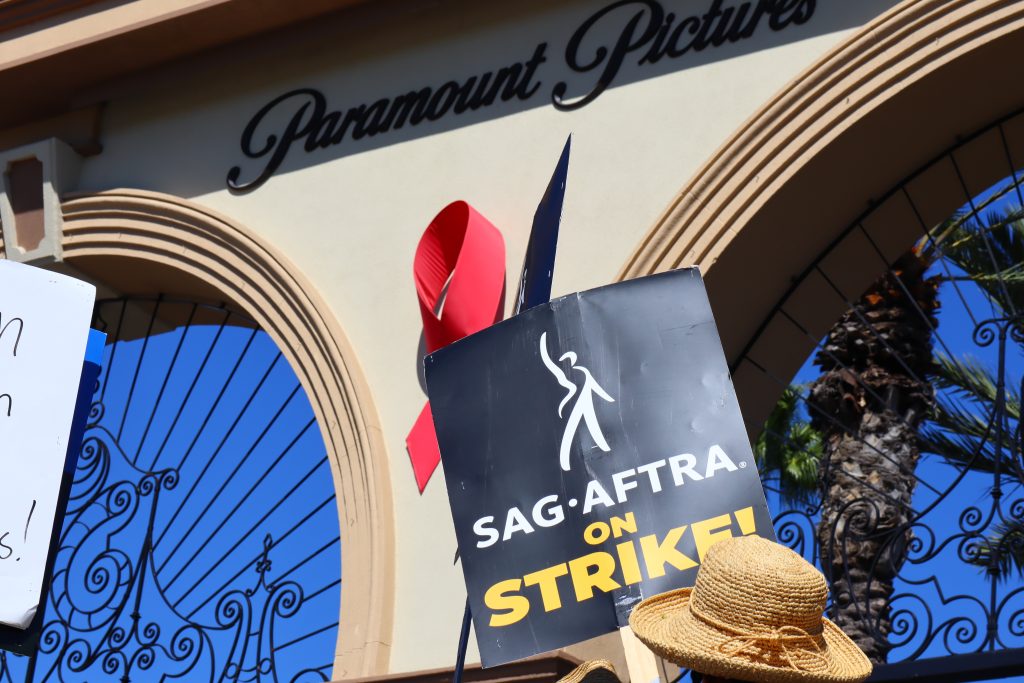
In 2023, a handful of provisions determining how big Hollywood studios would be able to use AI was cemented thanks to a 148 day strike from the Writers Guild of America (WGA). But beyond the contract, an uncertain future leaves many screenwriters anxious, especially those preparing to enter the industry in this new age of technology.
The contract states AI cannot be credited as a writer. A writer given AI-generated scripts to redraft will be considered the first writer of said scripts. AI also cannot be a requirement for writers to use when hired, and companies must disclose whether scripts given to writers were written with AI. Finally, the use of writers’ material being used to train AI is prohibited. The contract will be revisited in 2026.
Professor Margo Sawaya is an MSU and USC alumna who now teaches film and screenwriting. “Just before the strikes started, screenwriters were terrified of AI taking their jobs,” Sawaya said. She was one of many WGA writers who was directly impacted by the strikes. With Hollywood on hold, she returned to East Lansing in hopes of sharing her industry experience with film students.
On top of co-writing a feature about to go on a festival circuit, Sawaya previously worked in the writer’s room of Matt Groening’s “Disenchantment” for two years as an assistant. Her main responsibilities were note-taking during meetings, annotating the scripts when changes were made and distributing scripts to actors. “The system is set up so if you do a good job you can get promoted to eventually become a staff writer,” Sawaya said.
Prior to the strikes, the “Disenchantment” writers’ room not only hired 12 staff writers, but also two writer’s assistants and a writer’s production assistant. A rising issue since the agreement has been the gradual replacement of former writers’ rooms with mini rooms. “Instead of having 12 staff writers, a mini room would have maybe five or six,” Sawaya said. “Each writer might get multiple episodes. They’ll get paid well, but the sum is less than the previous amount that 12 writers would make. So the studio saves money.”
“Writers can protect themselves [from AI] by creating their own alternative intellectual property,” Sawaya said. Instead of writing a screenplay, consider telling your story as a comic book, novel, or even video game first. If a studio offers the chance to adapt it into a movie or show using AI, you’ll already own the IP and be able to get paid for it (in case the current WGA contract gets overturned or changed).
Though nobody can predict the future of how AI will change filmmaking, it’s important to avoid getting caught up in speculation. Embrace what makes your stories unique to your own personal human experiences — something AI will never be able to fully replicate.
Simon Richards is a Digital Storytelling senior at MSU with a minor in screenwriting.